Climate partnership representatives discussed decarbonization exchange instruments
07/09/2025

Climate partnership representatives discussed decarbonization exchange instruments
At the 2nd "Exchange - Traded Decarbonization Instruments" conference, held at the Moscow Exchange, experts assessed the prospects and regulatory incentives for developing exchange-traded carbon units and quota fulfillment units.
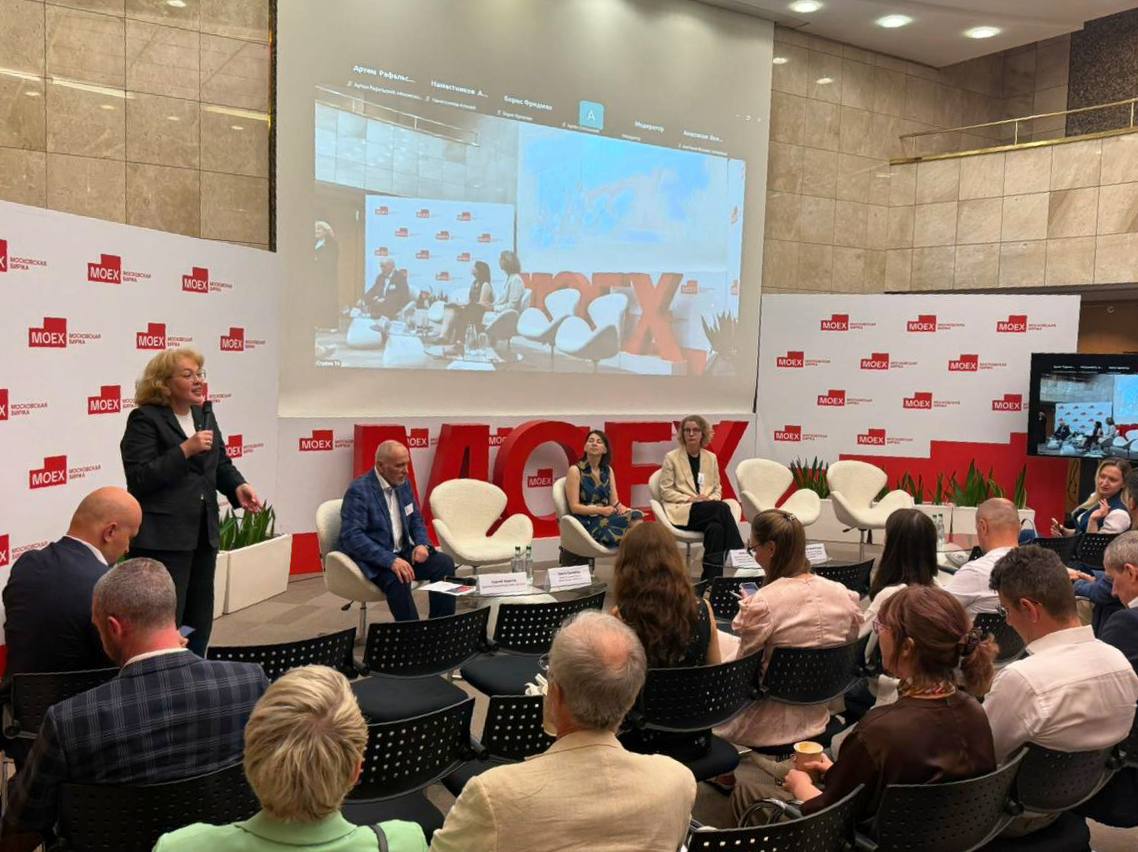
Olga Sanarova, coordinator of the organizing committee of the Climate Partnership of Russia, addressed the conference participants with opening remarks. "It's good that we already have tools that stimulate emission reductions and increase investor confidence—trading carbon credits and quota performance units. On June 30, an important transaction took place as part of the Sakhalin Experiment—the sale of quota performance units. At the same time, the green energy certificate market is developing and also growing. Exchange-traded instruments can thus become the language of economics in the current climate agenda," she noted.
She also recalled that, as part of the Partnership's 10th anniversary, a presentation was held (https://climatepartners.ru/news/yubiley-rossiyskogo-partnerstva-za-sokhranenie-klimata-10-let-v-inte...) of a large-scale study dedicated to the climate and ESG agenda of Russian companies. This study shows that businesses have only increased their attention to climate issues in recent years, including under the influence of new regulatory requirements at home and in global markets.
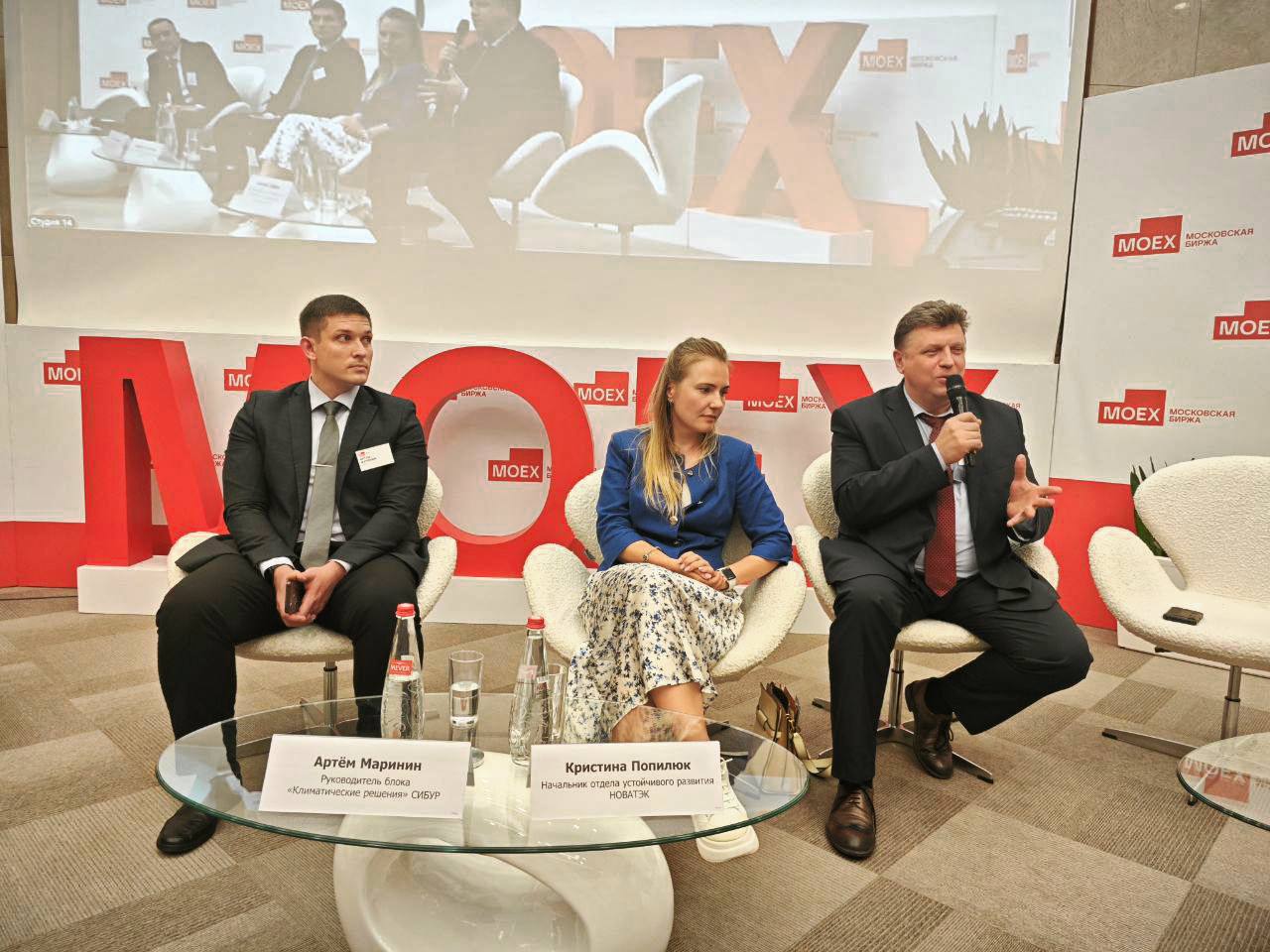
Alexey Spirin, Director of the Climate Projects Department at En+, noted that exporting companies are interested in developing the market for certificates of origin for electricity. "We have all the tools to provide our producers with green electricity. This is another tool that can be used completely legally and even more effectively than carbon credits," he said.
The conference featured the presentation of the Moscow Exchange Climate Resilience Index of Non-Financial Companies (ICLIMATE), an indicator calculated and published by Moscow Exchange since July 1, 2025. The index aims to help investors sel ect stocks of companies actively pursuing environmental initiatives and striving to reduce their negative impact on the environment. The index comprises 34 stocks selected fr om the Moscow Exchange Broad Market Index.
Olga Sanarova, coordinator of the organizing committee of the Climate Partnership of Russia, addressed the conference participants with opening remarks. "It's good that we already have tools that stimulate emission reductions and increase investor confidence—trading carbon credits and quota performance units. On June 30, an important transaction took place as part of the Sakhalin Experiment—the sale of quota performance units. At the same time, the green energy certificate market is developing and also growing. Exchange-traded instruments can thus become the language of economics in the current climate agenda," she noted.
She also recalled that, as part of the Partnership's 10th anniversary, a presentation was held (https://climatepartners.ru/news/yubiley-rossiyskogo-partnerstva-za-sokhranenie-klimata-10-let-v-inte...) of a large-scale study dedicated to the climate and ESG agenda of Russian companies. This study shows that businesses have only increased their attention to climate issues in recent years, including under the influence of new regulatory requirements at home and in global markets.
Alexey Spirin, Director of the Climate Projects Department at En+, noted that exporting companies are interested in developing the market for certificates of origin for electricity. "We have all the tools to provide our producers with green electricity. This is another tool that can be used completely legally and even more effectively than carbon credits," he said.
The conference featured the presentation of the Moscow Exchange Climate Resilience Index of Non-Financial Companies (ICLIMATE), an indicator calculated and published by Moscow Exchange since July 1, 2025. The index aims to help investors sel ect stocks of companies actively pursuing environmental initiatives and striving to reduce their negative impact on the environment. The index comprises 34 stocks selected fr om the Moscow Exchange Broad Market Index.