Experts discussed the prospects for trading carbon credits and green certificates in Russia
06/01/2026

Experts discussed the prospects for trading carbon credits and green certificates in Russia
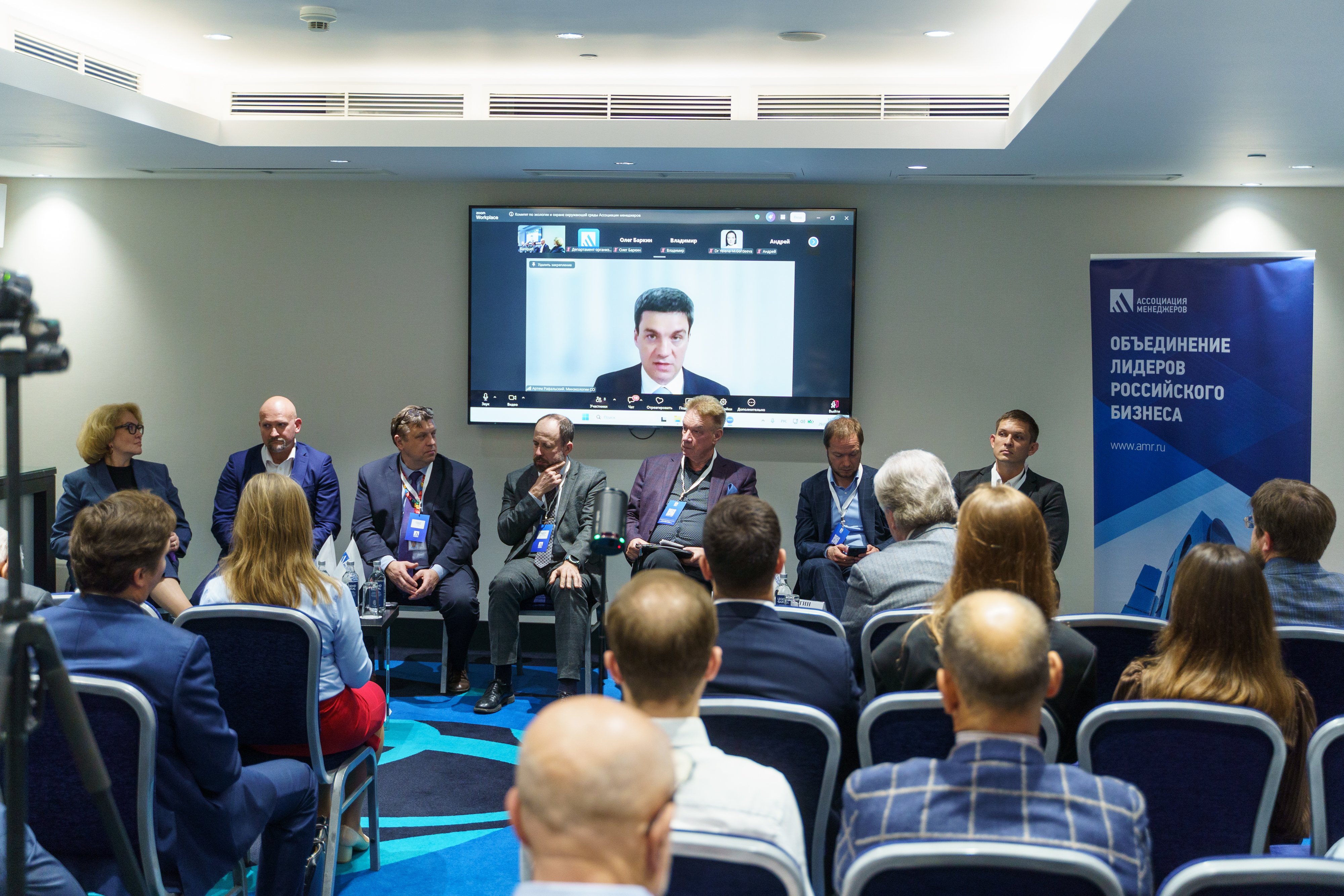
On May 29, the Russian Climate Partnership, together with the Committee on Ecology and Environmental Protection of the Russian Managers Association, held an expert session (announced as a "roundtable") dedicated to the current state and development prospects of the carbon credit and green certificate market in Russia.
The session was moderated by Olga Sanarova, Chair of the Committee on Ecology and Environmental Protection of the Russian Managers Association and Director of External Relations at En+ Group.
The discussion participants noted that the carbon credit market in Russia has moved from a theoretical to a practical level: validators and verifiers are actively working in 2026, large companies are reporting on climate goals, and a national low-carbon electricity certification system has been launched. However, the key challenge remains the imbalance between supply and demand.
"We see many sellers of carbon credits, but no obvious buyers. This puts pressure on prices. “If we want companies to invest in climate projects, we need regulatory measures that stimulate demand,” noted Maxim Kochetkov, Head of Sustainable Development at Moscow Exchange.
Experts emphasized the need for tax clarifications: businesses fear that the costs of purchasing carbon credits will not be taken into account in the tax base, which reduces the economic attractiveness of such investments.
Artem Rafalsky, Deputy Minister of Ecology and Sustainable Development of the Sakhalin Region, presented the results of the climate experiment in the region:
• Reduction of net emissions by 871 thousand tons of CO₂ equivalent;
• Growth of the region’s GRP by 51%, investment in fixed assets by 47%;
• The gasification rate increased from 14% to 68%;
• Sakhalin rose from 30th to 4th place in the national investment climate rating.
“The climate experiment has become a powerful investment driver for Sakhalin. "But it is necessary to overcome the psychological barrier of business and demonstrate that quota fulfillment units are a real asset, and not a side effect of participating in an experiment," emphasized Artem Rafalsky.
Vladimir Lukin, head of the validation and verification body, Kept Verification LLC, noted that the main barrier to market development remains a lack of trust. Despite the growing number of climate projects (forecast: up to 50 projects per year), a fair pricing mechanism has not yet been formed in Russia. "Companies purchase carbon credits primarily to manage risks - regulatory, reputational, export. But since these risks are not digitized, the factor does not work as a primary driver of demand," explained Vladimir Lukin.

Representatives of large businesses shared their experience of integrating the climate agenda into corporate strategies:
• Alexey Spirin (RUSAL) emphasized the importance of green attributes of electricity for reducing the carbon footprint of products, especially in the context of cross-border carbon management (CBAM).
• Artem Marinin (SIBUR) announced the launch of Russia's first B2C mechanism for compensating the carbon footprint of goods, jointly with the Wildberries marketplace: in the first month, more than 30,000 goods became carbon neutral thanks to this mechanism.
• Sergey Roginko (Institute for Economic Forecasting of the Russian Academy of Sciences) noted that, despite geopolitical challenges, work on external markets for carbon credits (within CORSIA, BRICS) remains a promising area.
• Oleg Barkin and Konstantin Gorelov (Center for Energy Certification of Generating Facilities) presented the results of the system's first full year of operation:
- The register includes 222 generating facilities with a total capacity of 42 GW (44% of all clean generation in the Russian Federation);
- 110 billion kWh of low-carbon electricity has already been confirmed by certificates or attributes;
- The system has received international recognition: the audit procedure for compliance with international standards has been completed, and a memorandum of mutual recognition has been signed with China.
"A green certificate is not only a reporting tool but also a marketing asset. Companies using it gain the right to position their products as environmentally friendly, which increases customer loyalty and competitiveness in the market," noted Konstantin Gorelov.

Olga Sanarova, concluding the discussion, outlined the key findings: the market for carbon credits and green certificates is experiencing growing pains, which means it is still growing. Moreover, demand for carbon certificates has emerged among individuals, but for buyers, participation is still more of a beneficial image component than an economic opportunity. Market drivers at the international level are CORSIA (a set of market rules aimed at reducing carbon emissions in the aviation industry) and CBAM (the European Union's cross-border carbon tax mechanism, introduced to combat global climate change).
Media about the event:
— Carbon market in search of demand / Economy / Nezavisimaya Gazeta (https://www.ng.ru/economics/2026-06-01/100_190001062026.html)
— carbon credits in Russia: the market is looking for a buyer, and business is looking for a price (https://www.mk.ru/economics/2026/06/01/uglerodnye-edinicy-v-rossii-rynok-ishhet-pokupatelya-a-biznes...)
— Alexey Spirin, Rusal: “carbon credits have ceased to be just an image tool” (https://www.bfm.ru/news/608040)
— Growth point. Climate assets are gradually becoming part of the economy. How does it work (https://lenta.ru/articles/2026/06/01/tochka-rosta/?ysclid=mpwagixnpq506761170)?
— Buyers offset the carbon footprint of more than 30,000 products (https://www.vedomosti.ru/esg/climate/news/2026/06/01/1201901-pokupateli-kompensirovali-uglerodnii-sl...)
The session was moderated by Olga Sanarova, Chair of the Committee on Ecology and Environmental Protection of the Russian Managers Association and Director of External Relations at En+ Group.
The discussion participants noted that the carbon credit market in Russia has moved from a theoretical to a practical level: validators and verifiers are actively working in 2026, large companies are reporting on climate goals, and a national low-carbon electricity certification system has been launched. However, the key challenge remains the imbalance between supply and demand.
"We see many sellers of carbon credits, but no obvious buyers. This puts pressure on prices. “If we want companies to invest in climate projects, we need regulatory measures that stimulate demand,” noted Maxim Kochetkov, Head of Sustainable Development at Moscow Exchange.
Experts emphasized the need for tax clarifications: businesses fear that the costs of purchasing carbon credits will not be taken into account in the tax base, which reduces the economic attractiveness of such investments.
Artem Rafalsky, Deputy Minister of Ecology and Sustainable Development of the Sakhalin Region, presented the results of the climate experiment in the region:
• Reduction of net emissions by 871 thousand tons of CO₂ equivalent;
• Growth of the region’s GRP by 51%, investment in fixed assets by 47%;
• The gasification rate increased from 14% to 68%;
• Sakhalin rose from 30th to 4th place in the national investment climate rating.
“The climate experiment has become a powerful investment driver for Sakhalin. "But it is necessary to overcome the psychological barrier of business and demonstrate that quota fulfillment units are a real asset, and not a side effect of participating in an experiment," emphasized Artem Rafalsky.
Vladimir Lukin, head of the validation and verification body, Kept Verification LLC, noted that the main barrier to market development remains a lack of trust. Despite the growing number of climate projects (forecast: up to 50 projects per year), a fair pricing mechanism has not yet been formed in Russia. "Companies purchase carbon credits primarily to manage risks - regulatory, reputational, export. But since these risks are not digitized, the factor does not work as a primary driver of demand," explained Vladimir Lukin.
Representatives of large businesses shared their experience of integrating the climate agenda into corporate strategies:
• Alexey Spirin (RUSAL) emphasized the importance of green attributes of electricity for reducing the carbon footprint of products, especially in the context of cross-border carbon management (CBAM).
• Artem Marinin (SIBUR) announced the launch of Russia's first B2C mechanism for compensating the carbon footprint of goods, jointly with the Wildberries marketplace: in the first month, more than 30,000 goods became carbon neutral thanks to this mechanism.
• Sergey Roginko (Institute for Economic Forecasting of the Russian Academy of Sciences) noted that, despite geopolitical challenges, work on external markets for carbon credits (within CORSIA, BRICS) remains a promising area.
• Oleg Barkin and Konstantin Gorelov (Center for Energy Certification of Generating Facilities) presented the results of the system's first full year of operation:
- The register includes 222 generating facilities with a total capacity of 42 GW (44% of all clean generation in the Russian Federation);
- 110 billion kWh of low-carbon electricity has already been confirmed by certificates or attributes;
- The system has received international recognition: the audit procedure for compliance with international standards has been completed, and a memorandum of mutual recognition has been signed with China.
"A green certificate is not only a reporting tool but also a marketing asset. Companies using it gain the right to position their products as environmentally friendly, which increases customer loyalty and competitiveness in the market," noted Konstantin Gorelov.
Olga Sanarova, concluding the discussion, outlined the key findings: the market for carbon credits and green certificates is experiencing growing pains, which means it is still growing. Moreover, demand for carbon certificates has emerged among individuals, but for buyers, participation is still more of a beneficial image component than an economic opportunity. Market drivers at the international level are CORSIA (a set of market rules aimed at reducing carbon emissions in the aviation industry) and CBAM (the European Union's cross-border carbon tax mechanism, introduced to combat global climate change).
Media about the event:
— Carbon market in search of demand / Economy / Nezavisimaya Gazeta (https://www.ng.ru/economics/2026-06-01/100_190001062026.html)
— carbon credits in Russia: the market is looking for a buyer, and business is looking for a price (https://www.mk.ru/economics/2026/06/01/uglerodnye-edinicy-v-rossii-rynok-ishhet-pokupatelya-a-biznes...)
— Alexey Spirin, Rusal: “carbon credits have ceased to be just an image tool” (https://www.bfm.ru/news/608040)
— Growth point. Climate assets are gradually becoming part of the economy. How does it work (https://lenta.ru/articles/2026/06/01/tochka-rosta/?ysclid=mpwagixnpq506761170)?
— Buyers offset the carbon footprint of more than 30,000 products (https://www.vedomosti.ru/esg/climate/news/2026/06/01/1201901-pokupateli-kompensirovali-uglerodnii-sl...)