Experts urged the creation of an international Arctic pavilion at COP 31 to boost climate related discussion
03/16/2026

Experts urged the creation of an international Arctic pavilion at COP 31 to boost climate related discussion
|
A discussion entitled "Climate Change in the Arctic: Challenges and Adaptation Measures. A Look at COP-31" was held at a session organized by the Northern Forum jointly with the Arctic Development Project Office and the Russian Climate Partnership. The event brought together diplomats, scientists, business representatives, and government officials. A key topic of discussion was the development of a consolidated Russian position on the Arctic for the 31st Conference of the Parties to the UN Framework Convention on the Arctic (COP-31), which will be held in November 2026 in Antalya, Turkey. Opening the discussion, moderator Olga Sanarova, chair of the Partnership's organizing committee, emphasized that mitigation and adaptation in the Arctic are not solely an environmental issue: "Today, it's a matter of security and economic stability. Warming in the region is occurring three to four times faster than the global average, threatening, among other things, infrastructure and the traditional way of life of indigenous peoples." Russian Ambassador Extraordinary and Plenipotentiary Anton Vasiliev outlined alarming trends: sea ice extent is reaching record lows, the Greenland ice sheet is melting, and the degradation of permafrost, which covers two-thirds of Russia's territory, is releasing methane and eroding building foundations. The ambassador called the climate agenda one of the few topics for maintaining international dialogue even amid geopolitical tensions and supported the idea of establishing an Arctic pavilion at COP-31. Anna Romanovskaya, Director of the Institute of Global Climate and Ecology at the Russian Academy of Sciences, pointed to systemic problems in addressing global warming. According to her, national emission reduction targets often fall short of reality, and federal adaptation plans lack quantitative performance indicators. "We lack national adaptation targets. Effective adaptation means that annual losses due to climate change do not increase. Currently, we are seeing pseudo-adaptation at the local level without an overall strategy," the expert noted. Business representatives shared their experiences of working in extreme conditions. Tatyana Goncharenko, ALROSA's Director of Sustainable Development, reported that the company was the first in the world to declare its diamonds carbon neutral, but sanctions pressure and technological limitations are forcing them to reconsider their deadlines. Anastasia Gabdrashitova (ALROSA ECO Center) added that the decision-making cycle for modernizing facilities in a changing climate can take up to five years, requiring the implementation of new risk management tools today. Nadezhda Krasilnikova, Director of the Arctic Research Center of the Republic of Sakha (Yakutia), spoke about the colossal damage to the regions. Over the past 10 years alone, direct damage fr om climate change in the republic has amounted to over 20 billion rubles, with floods accounting for almost half of that, and forest fires accounting for 42%. She emphasized the need to integrate climate change into the public administration system. Milena Milic, the regional governor's special representative, presented the successful experience of the Sakhalin Region. She highlighted the key factor for success: systematic, step-by-step work, including the creation of an authorized regional body that coordinates climate projects and develops a portfolio of tangible initiatives with measurable impact. One of the topics of discussion was the upcoming conference in Antalya. Northern Forum Executive Director Vladimir Vasiliev and Program Coordinator Arseniy Kirgizov-Barsky proposed creating an international Arctic pavilion at COP-31. The experience of COP-29 in Baku demonstrated the high demand for a neutral platform for dialogue between Russian experts and the international community, including representatives of the Arctic Council. Nature and People Foundation expert Alexey Kokorin noted that at COP-31, the global community will approve a system of indicators for assessing adaptation. "The Arctic can become a testing ground for demonstrating effective metrics. We don't have competition for climate funding like developing countries, so we can offer clean, science-based solutions," he said. HSE University Associate Professor Irina Strelnikova highlighted the potential for cooperation with BRICS countries in Arctic science and technology, and raised the need to develop an international regulatory framework for Arctic geoengineering, wh ere a legal vacuum currently exists. Nuclear energy, AI systems for ice monitoring, and passive ground cooling methods were cited as effective technologies. Following the session, participants called for the combined efforts of government, business, and science to build a strong Russian position in the climate arena. The Arctic pavilion at COP-31 could become a showcase for Russian technologies for adaptation, permafrost monitoring, and high-latitude biodiversity conservation. "We need to move from discussing problems to implementing specific projects that will ensure the security and sustainable development of the Russian Arctic zone," noted Vladimir Vasiliev, Executive Director of the Northern Forum. The expert analytical session "The Arctic in an Era of Change" also focused on the impact of climate change on Arctic ecosystems, which inevitably disrupts the traditional way of life of indigenous peoples. Olga Sanarova spoke to journalists about this problem. 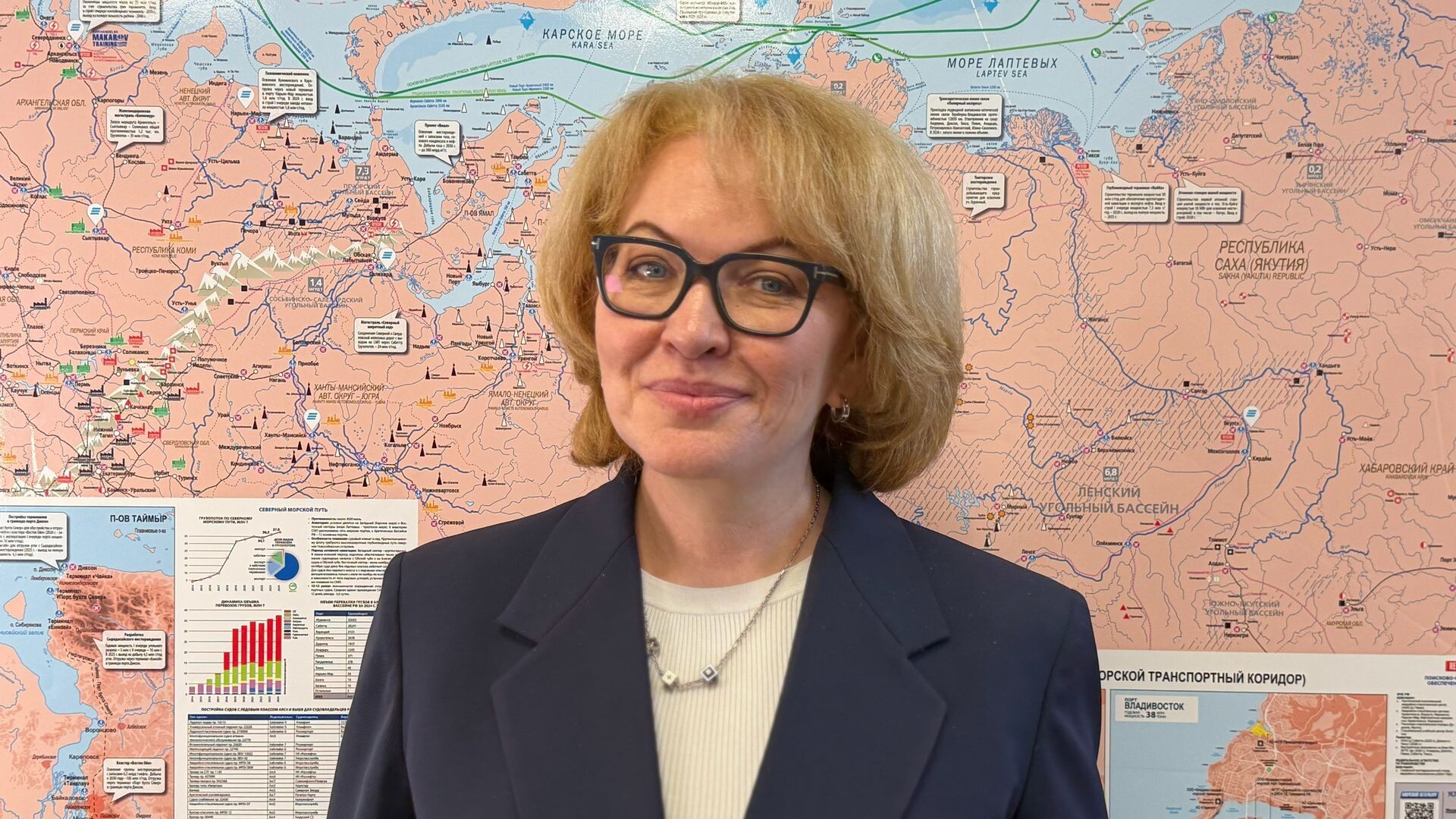 Read more at the link https://caspian.land/37301-olga-sanarova-izmenenie-klimata-vlijaet-na-zhizn-korennyh-narodov-arktiki.... (https://caspian.land/37301-olga-sanarova-izmenenie-klimata-vlijaet-na-zhizn-korennyh-narodov-arktiki...) Reference: The Northern Forum is an international non-governmental organization dedicated to the sustainable development of Arctic territories. The Arctic Development Project Office (ADPO) Expert Center was established in 2017 and is headquartered in Moscow. The Center facilitates the implementation of state policy in the Arctic, conducts research, educational, environmental, and cultural projects, and supports initiatives for the sustainable development of the Russian Arctic zone. The Russian Climate Partnership is an association of business, science, and the public working to implement climate projects and advance Russia's interests in sustainable development. |